How to Get More Commercial Illustration Work

Me at Ferragamo
How I Built a Career Illustrating for Dior, Chanel, and Versace (And How You Can Get Commercial Work Too)
When people find out I get paid to draw at fashion events, the question I get asked most — by both brands and fellow illustrators — is the same: how did you actually get here?
The honest answer is that commercial illustration work rarely comes from waiting to be discovered. It comes from a handful of deliberate choices: picking a lane, building a portfolio that reads as "hireable," and putting yourself in front of the right people consistently. Here's what's actually worked for me, whether you're an illustrator trying to land your first brand client or a brand wondering what to look for in one.
1. Pick a niche brands can actually book you for
"Illustrator" is not a service. "Live event illustrator for fashion and luxury brands" is. When I narrowed my focus to live sketching at events rather than trying to do a bit of everything, two things happened: my portfolio got stronger faster, because every new piece reinforced the same skill, and brands could immediately see what to hire me for.
If you're chasing commercial work, ask yourself what specific, bookable service you offer — live event drawing, product illustration, editorial fashion illustration, packaging — rather than leaving it as "I do illustration."
2. Build a portfolio that shows the job, not just the art
A personal sketchbook proves you can draw. A commercial portfolio needs to prove you can deliver for a brand, on the day, under pressure. That's a different thing.
Some of the pieces that have opened the most doors for me aren't necessarily my most "artistic" work — they're the ones that show context: a guest holding their finished illustration at a Chanel event, a full activation setup at a Miu Miu in-store, a live sketch signed with a client's name. Brands aren't just buying a drawing; they're buying an experience for their guests, so show the experience, not just the output.
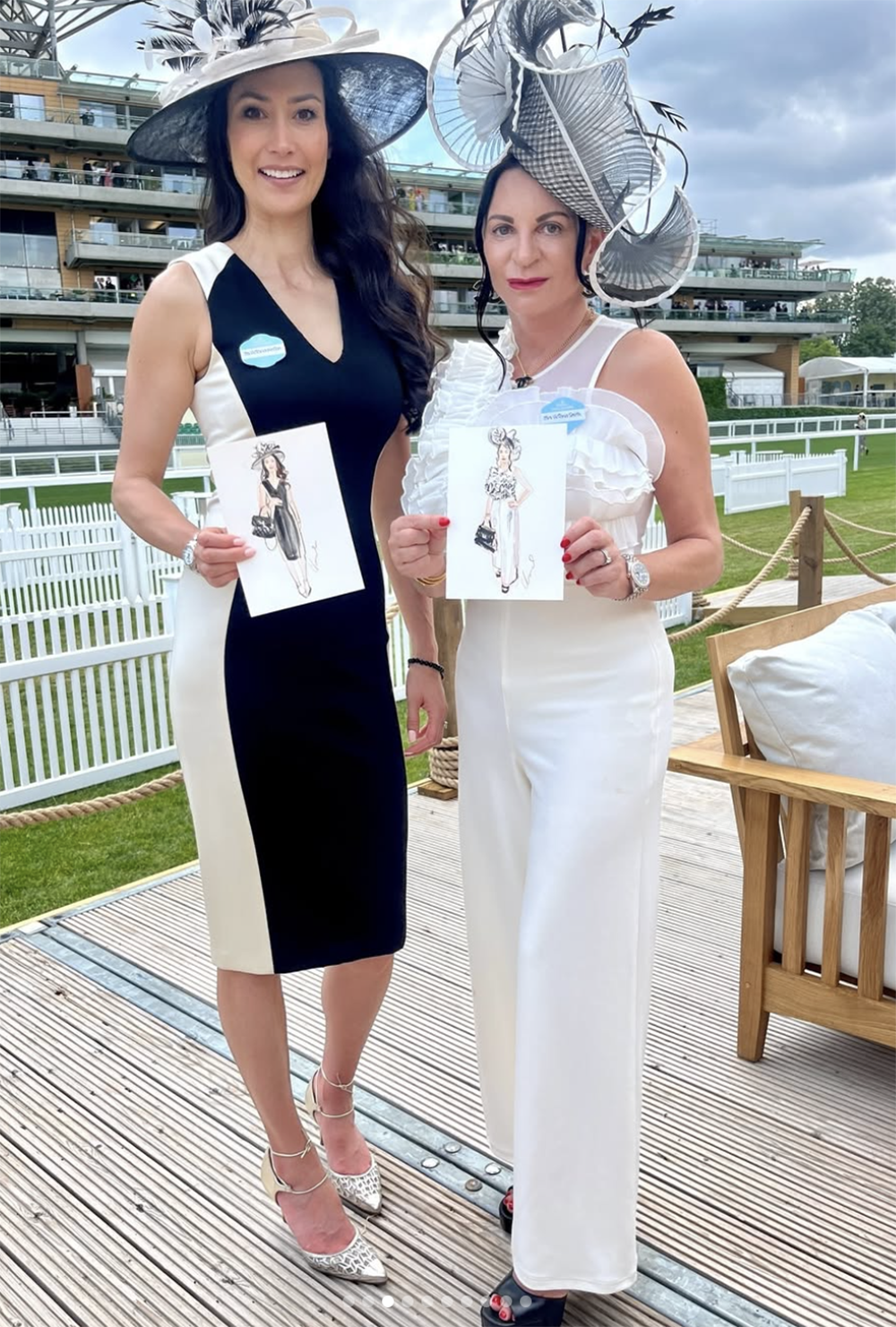
Guests at Royal Ascot for Chanel
3. Let your existing clients do the talking
Once you've done one brand activation — even a small one — that becomes your proof of concept for the next. I list every brand I've worked with (Dior, Chanel, Miu Miu, Tiffany & Co., Versace, Ferragamo, and others) directly on my site, and it does more heavy lifting than almost anything else. Brand teams often move in the same circles, follow similar agencies, and take a referral or a recognisable name far more seriously than a cold portfolio.
If you're just starting out, this might mean taking a lower rate or even a trade job for a smaller but credible brand, purely to get a nameable client on your site.
Suggested image: the client logo strip (Dior, Matches Fashion, Chanel, Miu Miu, Tiffany & Co., Bulgari, Toteme, Ferragamo, Versace, Alexander McQueen) — a simple visual "as seen with" block works well embedded partway through this post.
4. Get repping — agencies open doors solo pitching can't
A lot of my UK and international bookings come through my agency, Lipstick Agency, rather than direct outreach. Agencies already have relationships with brand marketing and events teams, and they get briefs before they're public. If you're serious about commercial work, researching illustration or talent agencies in your niche is worth as much time as polishing your portfolio.
5. Say yes to workshops and activations, not just static commissions
Some of my steadiest brand relationships started as one-off in-store workshops — teaching guests to sketch or paint at a Versace or Miu Miu activation — rather than a straightforward illustration commission. These gigs pay, but they also do double duty: they put your work (and your face) in front of a room full of the brand's actual clientele, and they often lead to repeat bookings because event teams already know you can hold a room and lead rather than just being an illustrator.
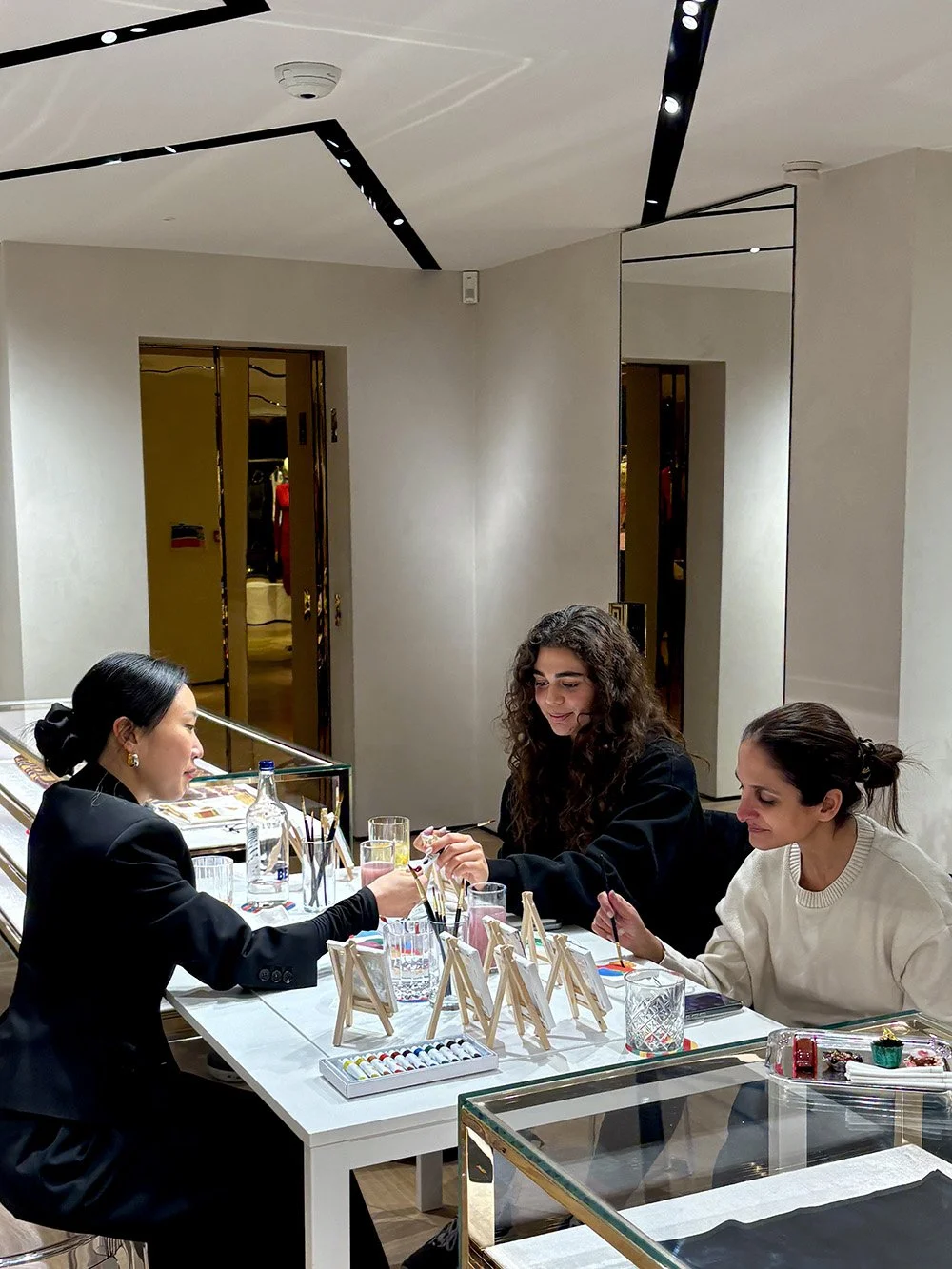
Live Workshop at the Versace store in London
6. Make it easy to say yes
Once someone is considering booking you, don't make them dig. Have your pricing structure (even just a starting rate), your process, and a clear contact route visible. My FAQ section answering "how much do you charge" and "how many sketches can you do in an hour" exists because event planners are often booking on a deadline and comparing multiple artists — the one who answers their obvious questions upfront gets picked faster.
The takeaway
Commercial illustration work compounds. Each brand client makes the next easier to land, each activation photo becomes portfolio proof, and each clear answer to a common question removes one more reason for a brand to hesitate. Pick your lane, document the work like a case study rather than a sketchbook, and make yourself easy to hire.
Want to see this in practice? Browse my live events portfolio or get in touch about a brand activation.